Shirley Ryan AbilityLab
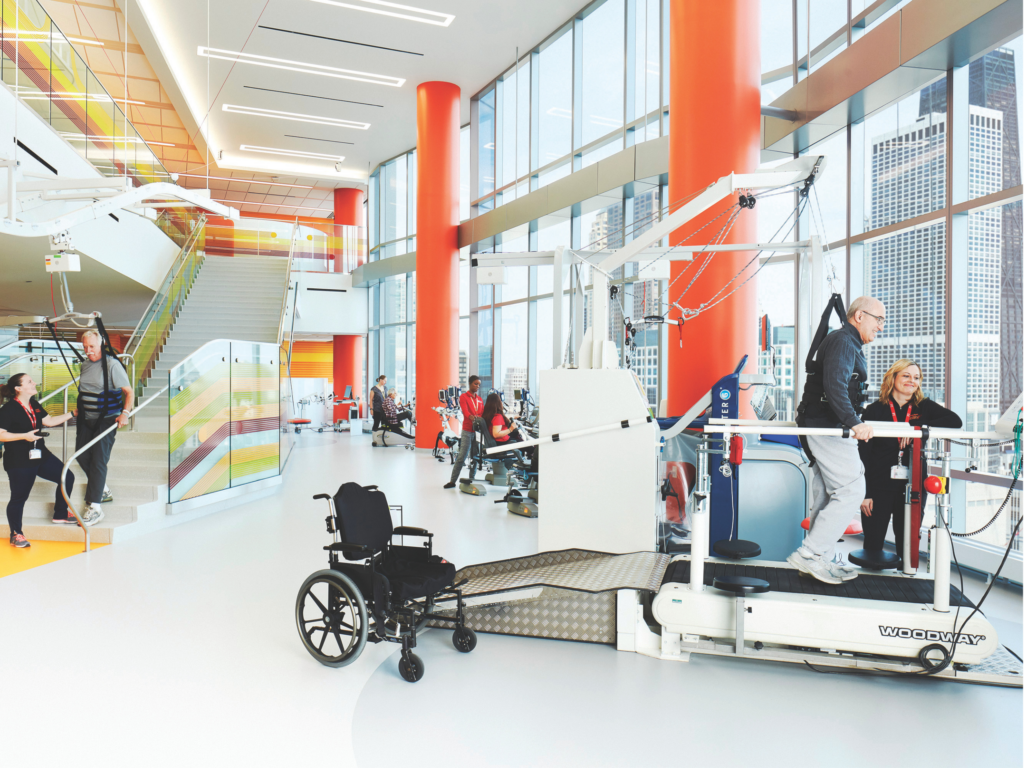
In 2024, we began our newest survivor initiative through our support of the Shirley Ryan AbilityLab (SRAL) in Chicago. This partnership helps to assist stroke and heart survivors, and their families, on their comeback journeys.
Since our Comeback Assistance Program (CAP) was created in 2018, we have heard from hundreds of stroke and heart survivors and their caregivers about the need for more resources, peer mentoring, housing requests, aphasia programs, and more. While CAP is unfortunately not equipped to fund every individual need, we know that helping to fund a successful, existing program, is a step in the right direction to supporting as many stroke and heart survivors as we can.
current funding updates:
the stroke recovery toolkit:
- A new item to the funding from last year is Shirley Ryan Ability Lab research scientist Arun Jayaraman, PT, PhD, scientific chair, technology and innovation. Arun is working to close the gap in stroke recovery with the development of a groundbreaking innovation: the stroke recovery toolkit.
- The stroke recovery toolkit utilizes wireless sensors that are the size of small bandages and adhere to a patient’s skin. These sensors measure important data points – such as walking ability, arm movement, balance, fall risk, swallowing ability, patterns of speech, step count, sleep quality, and heart rate. In the future, this data could help facilitate even more targeted rehabilitation by providing a picture of a patient’s progress in the hospital and out in the community – so clinicians can provide the right interventions at the right times. This innovation represents the future of stroke rehabilitation – a future where clinicians can personalize therapy plans and optimize patient outcomes.
- With our support of the stroke recovery toolkit, their scientists can continue to create evidence-based, scalable technologies that can change care trajectories for stroke survivors.
Spiritual care:
This includes faith counseling, family support and intervention, crisis intervention, grief counseling, pastoral care and other complementary therapies, such as meditation and progressive relaxation groups.
Caring for Our Community Program (Formerly called ‘Charity Care Program’)
- This program provides financial assistance so our most vulnerable or low-income patients have access to high-quality rehabilitation care, no matter their family’s financial situation.
Patient and Family Housing
- This program provides hotel accommodations to keep families together during their loved one’s recovery journey while reducing the financial barriers that can accompany a long hospital stay.
Intensive Comprehensive Aphasia Program
- This is a self-pay program. Not covered by insurance. $25,000 out of pocket cost for this program.